“If you knew the power of the dark side…”, for Darth Vader and George Lucas’s universe, the dark side may be stronger, but in gamification, that is not quite the case.
Being a considerably new technique, gamification still has many myths and criticisms. In this text, we will discuss some of these criticisms and also what gave rise to them.

Pointsification
Pointsification is a term coined by Margaret Robertson, a game designer, in 2010, in her text “Can’t play, Won’t play”. The expression refers to the points, achievements, and badges that usually exist in gamified systems and came as a criticism of the superficial application of these techniques, among other game elements.
In other words, pointsification occurs when you “take the thing that is least essential about games and represent it as the core of the experience”.
Robertson sees gamification as a way to deceive people, through marketing that claims it will improve people’s engagement, but in reality only creates an illusion of it. In other words, gamification is ineffective.
Similarly, Kathy Sierra, a game developer, states that “Gamification is the high-fructose corn syrup of engagement”, meaning it is good, people like it, but it is harmful if consumed in excess, and it serves no real purpose.
However, Kevin Werbach, a gamification scholar, does not believe these claims apply to all gamified systems, but rather to those based on extrinsic motivation.
In our text “What type of motivation drives you?” we explain in more detail what extrinsic motivation is. However, it is referenced in several other texts, such as Player Types and Octalysis, where it becomes clear that well-developed gamification systems seek intrinsic motivation, and that is precisely the defense argument used by Werbach.
(Bad gamification is bad)
— Kevin Werbach
In our text, where we discuss gamification in education, we point out some problems that a poorly designed gamification can cause. That is why, to use this technique, extensive study is required, not only in the field of games but also in the field of psychology.
The criticisms of Robertson and Sierra are not without merit; however, they cannot be generalized to all gamification systems, but rather to those that are poorly designed, without proper foundation and prior study. Still, they serve as an example of what not to do for those who want to develop a good project.
Exploitationware
Just like Pointsification, Exploitationware is used against gamification, but it refers to poorly developed gamification systems. However, it follows a completely different line of thinking.
While Margaret Robertson criticized the ineffectiveness of gamification, Ian Bogost, a game developer, criticizes the fact that it is so effective that it can manipulate people into doing what they do not want to do.
Exploitationware is a term that arises from the combination of the words Exploitation and Software and conveys the message that gamification exploits game software to replace real incentives with fictitious ones.
Bogost believes that this is a way to confuse people into ignoring the real working conditions and, from there, compromise the nature of economic and social exchanges between workers and their employers.
Just like with Pointsification, Exploitationware is not entirely wrong. Gamification has the power to influence people, which is why it is a field with many studies in psychology.
However, because it has a human-focused design, as mentioned in the Octalysis text, a well-designed gamified system is unlikely to influence people to do something that will be negative for them, except in cases of poorly planned gamification.
This brings us back to Kevin Werbach’s phrase, “Bad gamification is bad”, and just like any other service, when poorly designed, it produces negative results.
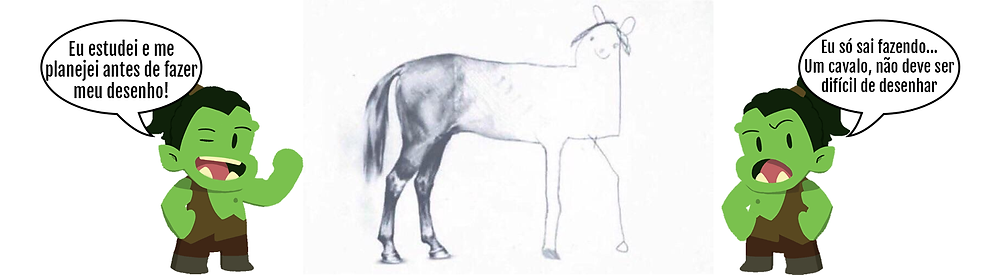
But does gamification work?
I am wondering if you have this question, but I think that, even if you don’t, you must have at least been left with some doubt.
Does gamification work? Yes. However, as with everything in life, nothing is perfect. It has its flaws, and what matters is the effort made to avoid them. And, to show you that it is possible to overcome these flaws and put your doubts to rest, I will now bring some examples of gamification systems that worked very well!
Speed Camera Lottery
A project developed by Volkswagen with the goal of reducing car speeds on avenues, the “Speed Camera Lottery” rewarded with a lottery ticket every car that passed at the correct speed for the road.
It seems simple, doesn’t it? But with the right application, this project reduced the average speed on the road where it was implemented by 22%, in addition to reducing accidents.
Besides this lottery, Volkswagen developed other gamification projects in a study called “The Fun Theory”, which can be seen in the following videos:
- The Fun Theory 1 – Piano Staircase Initiative | Volkswagen
- The Fun Theory 2 – an initiative of Volkswagen: The World’s Deepest Bin
- The Speed Camera Lottery - The Fun Theory
Orc’shop
The Orc’shop is a gamified workshop held by Orc’estra to teach about gamification. We took the content needed to build a solid foundation on this technique and compiled it into a workshop full of dynamics, moments of interaction, among other elements that were part of this gamification.
The result? A training that is applied every semester for the company’s new members and is also offered to other companies that want to learn more about this field, always with great feedback and a high rate of learning and content adoption.
There are several other examples of successful gamification systems; our portfolio itself has many, but I believe these are sufficient to show that, despite having a “Dark Side”, gamification has enormous potential when well applied.
To learn more about gamification and its benefits, feel free to read our post “What is gamification and how it can change your life”, to browse the blog, follow us on social media (LinkedIn, Instagram, and Facebook), listen to our podcast, or get in touch with us!
This post was originally written in Portuguese and translated to English by Claude (Anthropic).
Originally published on the Orc’estra Gamificacao blog. All rights reserved.