Developing a gamification is not an easy task. A wide range of knowledge is required to identify a pain point, analyze the target audience, and only then create the gamified design of the proposed service. However, there are some tools that help along this journey, and in this text we will talk about one of them: the 6D Framework.
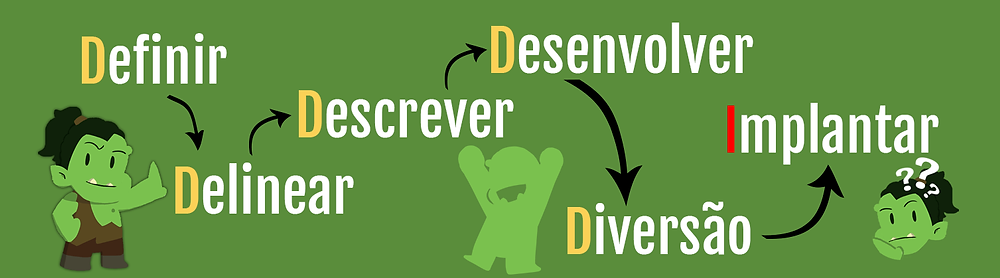
First of all, we need to know what gamification is. In short, gamification is a set of techniques aimed at improving performance in an activity, the motivation of those carrying it out, and as a result, changing the behavior of those people.
It does this based on 3 concepts:
- Mechanics, which are the Rules of the game, how it works. They are the actions that players have at their disposal to influence the game;
- Dynamics occur in the interaction of players with the environment in which the gamification is being applied;
- Finally, Game Elements, which are classic elements such as points, achievements, leaderboards, among others.
As I said, this is just a summary. To better understand what gamification is before continuing this text, read “What is gamification and how can it change your life.”
But if there was already a text on this subject, why write this summary before presenting it? Because those three highlighted topics above will be very useful in explaining our main subject, the 6D.
The 6D Framework
Kevin Werbach is an entrepreneur, American author, professor at The Wharton School, University of Pennsylvania, and creator of the 6D Framework. In his course, Gamification, he explains several points about how to develop a gamification and presents this tool that is based on 6 actions needed for a complete design. They are:
- Define Business Objectives (Define Business Objectives)
- Delineate target behavior (Delineate target behavior)
- Describe your players (Describe yours players)
- Devise activity loops (Devise activity loops)
- Don’t forget the fun (Don’t forget the fun)
- Deploy appropriate tools (Deploy appropriate tools)
Define Business Objectives
This step refers to what you want to achieve with the gamification. Is it a project aimed at the company’s employees? Is the intention to make them work more efficiently, or is it to create in them the habit of taking care of themselves outside the company?
An effective process for this activity is to list the possible objectives concretely and prioritize them according to your needs.
- Make a list as concrete as possible and rank it;
- Eliminate things that are not a final objective of the project;
- Justify your objectives: “Why is this something to be achieved?”;
Delineate target behavior
Describing the expected behavior of the target audience is a very important task for defining the project’s development. This way, the gamification can be created with a clear objective in mind. “How do I expect my audience to act during and after applying this project?” is the main question of this step.
In this step it is necessary to:
- Specify the tasks, for example, a company that has problems with punctuality:
- Arriving on time for meetings;
- Not being late when returning from lunch break;
- Define success metrics for all tasks, such as meetings always starting on time;
- Define ways to measure these success metrics, for example:
- Number of meetings that started late within a one-month period;
However, these tasks must be well planned to prevent players from falling into Cognitive Biases (Behavioral Biases), that is, automating their actions and acting without reasoning about what they are doing.
Cognitive Biases are tendencies that can lead to systematic deviations from logic and irrational decisions, as can be seen in the study of the Skinner Box, in which a rat is induced to perform an action and begins to do it systematically after learning it.
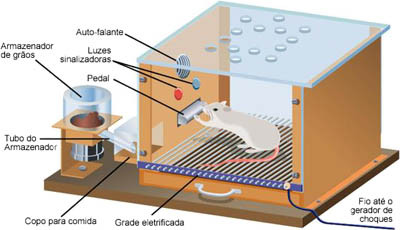
In this study, the animal is placed in a box that contains a lever positioned above a food dispenser, two lights, and a speaker. When pressed, the lever releases a small amount of food.
After repeating the act of pressing the lever and receiving food a few times, the rat associates the action performed with the “reward” received and begins to repeat it every time it feels hungry. It “learns” a new behavior.
— Kevin Werbach
Describe yours players
This is the step that most involves the analysis of the target audience. What do you know about them? (Demographics, Age range, Psychographics, Type of behavior…) It may seem difficult to answer, but in gamification we have several tools that help us define the Player Types we are dealing with.
Player is the name given to anyone who participates in a gamification, and if you did not already know this, I recommend reading our text “What are Player Types? And which type are you?” before continuing.
To complete this task, it is essential to define who you are dealing with, so that it is possible to motivate them in the right way. Frameworks such as HEXAD and Bartle’s Player Types are of great help for this occasion.
Devise activity loops
In this step, one evaluates the activities that occur repetitively or recursively. More specifically, one should focus on two types:
- Engagement loops, which are based on the rules of Motivational Design. They have three main points:
- Motivation: motivating users to do something expected;
- Action: the user performs the task;
- Feedback: the user receives immediate feedback to motivate them and repeat the cycle;
- Progression loops, which make the user develop a skill so they can fully master it. They consist of intermediate activities that provide small challenges to be overcome.
Self-Determination Theory (SDT) is very important in this step. This theory analyzes the extrinsic and intrinsic motivations that help individuals perform certain tasks and is centered on three basic needs: Competence, Autonomy, and Relatedness;
By using it, it is possible to determine tasks in which users understand why they are doing something, and thus do not lose the desire to carry them out.
Don’t forget the fun
According to Marc LeBlanc, in his research “8 kinds of fun”, the following words describe more clearly the fun found in games:
- Sensation: Game as sense-pleasure. Games that evoke emotion in the player, whether through sounds, visual resources, control feedback, or physical effort. Examples: Dead Space, Dance Dance Revolution, Candy Crush Saga
- Fantasy: Game as make-believe. Game as a means of taking the player to another world, some call it escapism. Examples: Final Fantasy, Nier: Automata, The Legend of Zelda
- Narrative: Game as drama. Game as a means of telling a story or narrative to the player. Examples: The Walking Dead, Persona 3, Dear Esther
- Challenge: Game as obstacle course. Games that provide the player(s) with a highly competitive value or increasingly difficult challenges. Examples: Dark Souls, Tetris, X-COM
- Fellowship: Game as social framework. Games that have social interactions as the core or as a major feature. Examples: Mario Kart, Destiny, World of Warcraft
- Discovery: Game as uncharted territory. Games in which the player explores the world they find themselves in. Examples: Uncharted, Tomb Raider, Assassin’s Creed
- Expression: Game as self-discovery. Games that allow the player’s self-expression through gameplay. Examples: Minecraft, Garry’s Mod, Roblox
- Submission: Game as pastime. Games that have “farming” or “grinding” as a central element. Examples: FarmVille, Hyperdimension Neptunia, Disgaea
And Werbach reinforces the importance of not forgetting these elements when creating a gamified system. Sometimes, the focus on the final objective causes fun to be set aside, but this mistake can cause serious problems over time.
Deploy appropriate tools
The last, but not least important, step of the 6D is the use of appropriate tools! Applying the right mechanics and game elements so that the dynamics exercised match your player types.
And, as in the other steps, there is also a Framework to assist in this part of development, the Octalysis. You can read about it in the text “Octalysis, the Gamification framework you need to know!” And it is important to know how to avoid some bad practices such as Pointsification and Exploitationware.
Pointsification consists of placing scoring as the main element of the gamification or, as Game Designer Margaret Robertson said, “Taking the thing that is least essential to games and representing it as the core of an experience.”
Meanwhile, Exploitationware consists of the act of manipulating/deceiving players to get something, making the relationship between company and customer a one-way street, where the only one who benefits is the company.
Despite being a very complete framework, it is necessary to know several concepts to use the 6D, which makes it difficult to retain. So, to better visualize the content explained, take a look at our portfolio. There you will find several examples of projects that used this tool.
To learn more about gamification and its benefits, feel free to browse the blog, follow us on social media (LinkedIn, Instagram, and Facebook), listen to our podcast, or contact us!
This post was originally written in Portuguese and translated to English by Claude (Anthropic).
Originally published on the Orc’estra Gamificacao blog. All rights reserved.