Have you ever wondered why you spend hours playing a game and don’t want to stop? And how that can influence your life? Jane McGonigal has the answer, and she goes even further – she believes that by playing games, we can change the world!
But, first…
Who is Jane McGonigal?
Jane McGonigal, PhD, is a world-renowned designer in the field of alternate reality games – or games designed to improve real lives and solve real problems.
She believes that game designers are on a humanitarian mission, and her #1 goal in life is to see a game developer win a Nobel Peace Prize.
She is the author of two New York Times best-sellers: Reality is Broken: Why Games Make Us Better and How They Can Change the World (Penguin Press, 2011) and SuperBetter: The Power of Living Gamefully (Penguin Press, 2016).
Her TED Talks on how games can make the world better and the game that can give you 10 extra years of life are among the most popular talks of all time and have over 15 million views.
In them, she discusses how games influence people’s lives, helping develop skills that are useful in real life, and how time spent on games is not wasted but rather something that can improve lives.
She is best known as the inventor and co-founder of SuperBetter, a game that has helped over a million players face real-life health challenges such as depression, anxiety, chronic pain, and traumatic brain injury.
I could tell you more about Jane, but I think you already have a good idea of who we’re talking about. In any case, her biography is available online, on her website, if you want to check it out later.
The Influence of Games on My Life
From the first time I saw Jane’s videos talking about the positive impacts that games can bring to humanity, I was amazed, because it’s not something you see every day.
In our society, there are still many people who see games as something futile, meaningless, nothing more than a waste of time, and having someone come along and bring this different perspective was something that truly fascinated me.
I was always someone who played a lot and I think I had never stopped to think about why, and when I really started to question my reasons, I raised some points about the influence of games on my life.
One of the first things I noticed was that the first online game I played, Grand Chase, came largely from the influence of the people around me, the desire to be part of that group and the desire to go on adventures with those people.
That was one of the initial steps for me to enter this world and, when I started playing, the game’s story was something that impacted me greatly. Being the hero of Bermesiah, the continent where the character’s journey begins, having to save the world from evil forces truly captivated me within that experience.
And that game was such a part of that moment in my life that I even stopped buying candy and other things to save money and buy in-game items. But why did I do all of that for just a game?
Thinking about it a bit more, sometimes we, as humans, end up limiting our lives to everyday situations that often have nothing fun about them and that we do just to fit into society, such as studying, working, going to church, etc.
When something comes along that completely changes your view of the world and shows that life can be more fun, you end up getting attached to it and no longer wanting to leave the house, knowing that the real world isn’t fun in that way.
That was one of the things that most drew me into the world of games – being able to find another reality.
I always had a lot of difficulty socializing, sharing my opinions, feeling that I could be myself, and I often felt incapable in many situations, but when I entered the world of games, it was as if I had forgotten all of that.
I could truly be myself, I had the feeling that I was evolving within the game, that I was capable of doing things within that world, and I was able to socialize, so much so that most of the great friends I have today came as a result of some game we played together in the past, or still play to this day.
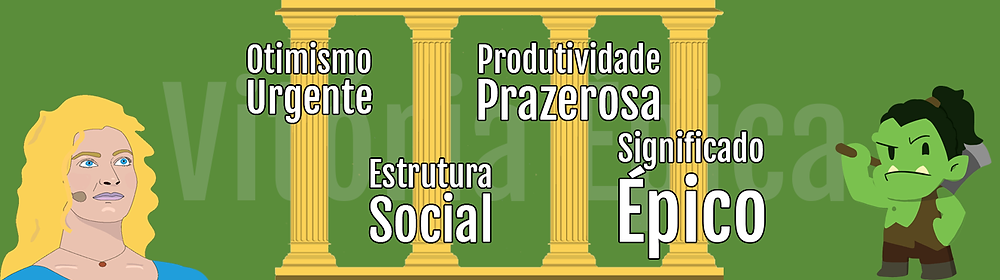
With that in mind and the research done by Jane, there are four main pillars we can extract from games to make our lives better.
The 4 Pillars
The first one is urgent optimism. Players always have the feeling that they need to do something, that they can’t just stand still, and they always believe they have the potential for it. This pillar is what makes players feel empowered and motivated to face the challenges ahead.
The second is building a social fabric, because when you’re playing with someone, whether you like it or not, you end up giving that person a vote of confidence – that they’re there with the same goal as you, that they’ll follow the rules of the game, and that if you need help, they’ll lend a helping hand.
There are several studies that show that when you start playing with a person, you begin to trust them more and like them more. Some examples can be found on Google itself, such as:
- The influence of competitive and cooperative video games on behavior during play and friendship quality in adolescence
- Do adolescent gamers make friends offline? Identity and friendship formation in school
The third is blissful productivity. When you’re in a game, most of the time you’re playing because you enjoy doing it, not because it’s your obligation, but because it’s something fun to do.
One effect of this is the feeling that time flew by while you were playing. You spend hours at it and don’t notice, because it was something enjoyable to do, just like what happens in the flow state, referenced in Flow Theory.
And the last one, in my view one of the most important, is epic meaning, which is where the game works with the idea that you are participating in something bigger, that all your actions will have an impact on the universe, and that you are one of the people who is truly making a difference.
It is because of all this meaning that one of the largest encyclopedias in the world is the World of Warcraft one.
And all of these factors contribute to gamers being highly hopeful people, because within games they believe they have the ability to change the world.
This happens due to the feeling of reward that comes from constant feedback, visualization of character progression, rewards themselves, among other elements. And this gives the player the feeling of the Epic Win.
The Epic Win
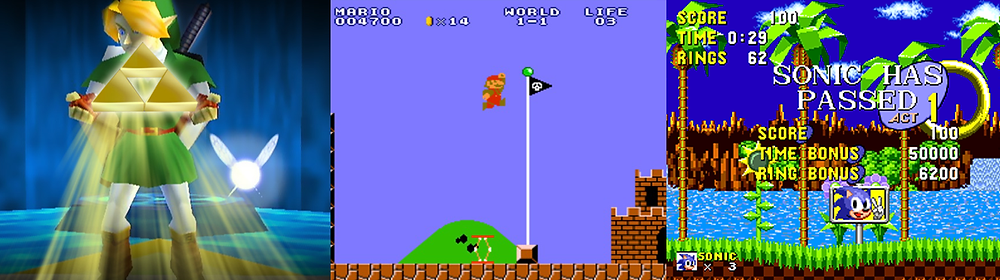
According to Jane, the epic win occurs when you achieve a result so extraordinarily positive that you didn’t even imagine it was possible until you reached it. Something that was almost beyond the threshold of imagination and, when you get there, you are shocked to discover what you are truly capable of.
Now, imagine if that feeling were applied to daily activities? Sooner or later, people will realize that performing tasks on autopilot is no longer satisfying and they will feel unmotivated to carry them out. So, why don’t we start bringing all these aspects of games into real life?
This way, people around the world would start feeling good about what they do, they would enjoy it and want to grow more and more. Removing the automation from tasks and turning them into blissful productivity.
In addition to transforming the world into a more humane place, where happiness is truly the focus, we will also come to understand how impactful games can be in people’s lives, which would lead to more studies on the subject and increasingly greater results.
You may not have noticed, but even though Jane doesn’t use the term “gamification” yet, her ideas follow the same objective as this technique. To learn more about it and its benefits, feel free to read our post “What is gamification and how it can change your life”.
To see more content like this, you can browse through the blog, follow us on social media (LinkedIn, Instagram, and Facebook), listen to our podcast, or even get in touch with us and visit our portfolio, where you’ll find examples of our services.
This post was originally written in Portuguese and translated to English by Claude (Anthropic).
Originally published on the Orc’estra Gamificacao blog. All rights reserved.